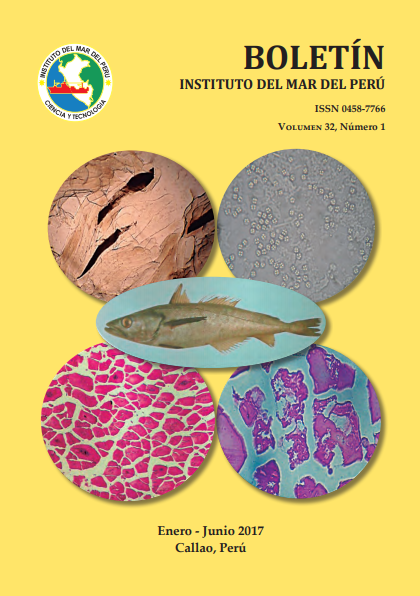
Parasitology, histology, histopathology in aquatic animals
Keywords:
Parasitology, Histology, Histopathology, aquatic animalsAbstract
The objective of the present work is to present the different types of parasites found in 32 marine species of the Peruvian coast and freshwater; fish, mollusks and crustaceans are included, acting as hosts. The research is related to parasitic helminthofauna, fungi, bacteria, protozoa and some crustaceans. It has been developed for 30 years, mainly in Peru, in the Regional Laboratories of IMARPE, and in the Laboratory of Invertebrate Zoology of the National University of San Marcos, in the Laboratory of Aquaculture Health of the National Agrarian University La Molina and, in the laboratory of Functional Morphology of the University of Rio Grande do Sul (FURG) in Brazil. Compound microscopes and the Hematoxylin-Eosin staining technique were used for histological sections and hematoxylin D’Lafield and borax carmine for helminths. It emphasizes the presence of endoparasites in the “grey mullet”. A new genus and new species of monogeneo in the “palm fish”; protozoan cysts in the “Peruvian anchovy”, “mackerel”, “common sole”. The fungus Icthyophonus hoferi in the hepatic tissue of the “rainbow trout”; larvae of cestodes in the skeletal muscle tissue of the “sea bass” andt the myxosporidium Kudoa peruvianus, endoparasite of the muscle tissue of the “Peruvian hake”, among others.
Downloads
Metrics
References
Aguilera P, Noriega P. 1985. La tilapia y su cultivo. FONDEPESCA. México. pp: 1-59.
Agius C. 1985. The melano-macrophage centres of fish: A review. En: Fish Immunology. M.J. Manning y M.F. Tatner. Academic Press. Londres. pp: 85-106.
Alfaro R, Guevara M, Gonzales I. 2010. Prevalencia y distribución de los principales agentes etiológicos que afectan los langostinos silvestres en Tumbes, Perú. Fac. CC. BB. UNMSM. Rev. peru. biol. 17(3): 359 – 364.
Allinkausay 2013. Cojinova mocosa. (En línea). Disponible en: http://allinkausay.pe/wp-content/uploads/2013/12/Cojinova-Mocosa-Schedophilushaedrichi.pdf.
Alves D R, Luque J, Abdallah V D. 2003. Metazoan parasites of Chub mackerel, Scomber japonicus Houttuyn (Osteichthyes: Scombridae), from the Coastal zone of the State of Rio de Janeiro, Brazil. Rev. Bras. Parasitol. Vet., 12(4): 164-170.
Alves D R, Luque J. 2001. Community Ecology of the Metazoan Parasites of White croaker, Micropogonias furnieri (Osteichthyes: Sciaenidae), from the Coastal Zone of the State of Rio de Janeiro, Brazil. Rev. Mem. Inst. Oswaldo Cruz, Rio de Janeiro, Vol. 96(2): 145-153.
Arana-Flores N, García-Ruiz L, Reátegui-Tobler J E. 2013. Índice de mortalidad en cultivo del camarón gigante de agua dulce (Macrobrachium rosenbergii) en estanques seminaturales en Loreto, Perú. Ciencia amazónica (Iquitos). Vol. 3(2): 96-103.
Armas G, Ibañez N. 1978. Helmintos de Paralabrax humeralisCuvier y Valenciennes, 1829 “cabrilla”, pez de consumo humano del litoral peruano. Libro de Resúmenes. I Congreso Nacional de Pesquería. Universidad Nacional de Trujillo. Pgs.:1-175.
Avala J, Aguirre W. 2005. Scanning electron microscopy of Neoechinorhynchus sp. (Acanthocephala: Neoechinorhynchidae), a possible new species of intestinal parasite of the Tallfin croaker Micropogonias altipinnis (Günther, 1864). Rev. Parasitol. Latinoam. 60: 48 – 53.
Bahri S, Marques A. 1996. Myxosporean parasites of the genus Myxobolus from Mugil cephalus in Ichkeul lagoon, Tunisia: description of two new species. Rev. Dis. Aquat. Org. Vol. 27: 115-122.
Baltazar P. 2007 La tilapia en el Perú: acuicultura, mercado y perspectivas. Ver.peri biol. V.13 n.3.
Baltazar P, Uribe R A, Flores M, Rodenas P, GonzalesJ. 2003. Manual de cultivo de tilapias en estanques. FONDEPES. pp: 1-62.
Brahm J, Pereira-Júnior J, Gonzales F. 2003. Histopatologia no fígado de Prionace glauca (Chondrichthyes, Squaliformes, Carcharhinidae) causada por Hepatoxylon trichiuri (Eucestoda, Trypanorhyncha). Biociências, Porto Alegre, Vol. 11 (2): 167-172.
Bunkley W L, Williams E H. 1995. Parásitos de peces de valor recreativo en agua dulce de Puerto Rico. Univ. de Pto. Rico. Lajas, Pto. Rico. Pp: 1-186.
Bush A O, Lafferty K D, Lotz J M, Shostak A W. 1997. Parasitology Meets Ecology on its own terms: Margolis et al. Revisited. J. Parasitol. 83(4): 575-583.
Bustillo-Ruiz M, Escobedo-Bonilla C, Sotelo-Mundo R. 2009. Revisión de patogénesis y estrategias moleculares contra el virus del síndrome de la mancha blanca en camarones peneidos. Revista de Biología Marina y Oceanografía. Vol. 44 (1): 1-11.
Cabrera R, Luna-Pineda M A, Suárez-Ognio L. 2003. Nuevo caso de infección humana por una larva de Pseudoterranova decipiens (Nematoda, Anisakidae) en el Perú. Revista de Gastroenterología del Perú. Vol. 23 (3): 217-220.
Cabrera R, Suárez-Ognio L. 2002. Probable emergencia de anisakiosis por larvas de Anisakis physeteris durante el fenómeno El Niño 1997-98 en la costa peruana. Rev. Parasitol. Latinoam. 57: 166 – 170.
Cabrera R, Trillo A P. 2004. Anisakidosis: ¿Una zoonosis parasitaria marina desconocida o emergente en el Perú?. Revista Peruana de Gastroenterología. Vol. 24: 335-342.
Cáceres-Martínez. 2002. Parasitología en moluscos pectínidos. En: Los moluscos pectínidos de Iberoamérica: Ciencia y Acuicultura. AN. Maeda-Martínez (edit.) 2001. Cap. 17: 343.356.
Carnevia D, Speranza G. 2003. Enfermedades diagnosticadas en peces ornamentales tropicales de criaderos de Uruguay: I. Parasitosis. Veterinaria Montevideo, v.38, n. 150-151, pp: 29-34.
Carozza C, Lasta C, Ruarte C. 2000. Corvina rubia (Micropogonias furnieri). Pesquerías de Argentina, 1997-1999. pp: 53-64.
Castro L, Ramos D. 2011. Ecologia da comunidade de metazoários parasitas do dourado, Coryphaena hippurusLinnaeus, 1758, (Osteichthyes: Coryphaenidae) do litoral do Estado do Rio de Janeiro, Brasil. Cadernos UniFOA. Volta Redonda, Edição VI, No. 16: 111-122.
Castro R, Burgos R. 1996. Kudoa thyrsithes (Myxozoa, Multivalvulida) causing “milky condition” in the musculature of Paralichthys adspersus (Neopterygii, Pleuronectiformes, (Paralichthydae) from Chile. Mem. Inst. Osw. Cruz, R. Janeiro, Vol. 91(2): 163-164.
Castro T, Peña C, Mateo E. 2014. First Report of viral diseases in rainbow trout Oncorhynchus mykiss in Perú. Rev. Biologist. Vol. 12 (1): 67-75.
CCI (Corporación Colombia Internacional) 2008. Sistema de Información de precios y mercados para la producción acuícola y pesquera. Artículo comportamiento de la comercialización de corvina en la ciudad de Cali.Vol. 4 (39): 1pp.
Céspedes R, Iannacone J, Salas A. 2011. Helmintos parásitos de Dosidicus gigas “pota” eviscerada en Arequipa, Perú. Ecol. Aplic. Vol. 10 (1): 1-11.
Chero J, Cruces C, Iannacone J, Sáez G, Alvariño L, DiestroA. 2015. Prevalencia de infección por Kudoa peruviana Mateo 1972, (Myxosporea: Kudoidae) en la musculatura somática de la merluza peruana Merluccius gayi peruanus (Ginsburg, 1954) (Perciformes: Merlucciidae) de la Costa central del Perú. Neotropical Helminthology Vol. 9 (1): 73-85.
Chero J, Sáez G, Iannacone J, Aquino W. 2014. Aspectos ecológicos de parásitos helmintos de la lorna Sciaena deliciosa (Tschudi, 1846) (Perciformes: Sciaenidae), adquiridos en el Terminal de Ventanilla, Callao, Peru. Neotropical Helminthology, vol. 8(1): 59 - 76.
Chero J, Cruces C, Iannacone J, Sáez G, Alvariño L, Rodriguez C, Rodriguez H, Tuesta E, Pacheco A, Huamaní N. 2014. Índices Parasitológicos de la merluza peruana Merluccius gayi peruanus (Ginsburg, 1954) (Perciformes: Merluccidae) adquiridos del terminal pesquero de Ventanilla, Callao, Perú. Neotropical Helminthology, Vol. 8(1): 141-162.
Chirichigno N, Cornejo U. 2001. Catálogo Comentado de los Peces Marinos del Perú. Publicación Especial. Instituto del Mar del Perú (IMARPE). Callao, Perú. pp: 1-314.
Chirichigno N, Vélez J. 1998. Clave para identificar los peces marinos del Perú. (2da. Edic.). Publicación Especial. IMARPE. pp: 1-500.
Conroy G, Conroy D A. 1998. Enfermedades y parásitos de cachamas, pacus y tilapias. Docum. Técn. No. 3 Pharma Fish SRL, Venezuela. pp: 1-78.
Cota M N J. 2012. Escala de Madurez gonadal del Lenguado Paralichthys adspersus (Steindachner, 1867). Tesis Titulo de Biólogo con mención en Hidrobiología y Pesquería. Fac. CC. BB., UNMSM-Lima. pp: 1-100.
Cruces C, Chero J, Iannacone J, Diestro A, Sáez G, Alvariño L. 2014. Metazoos parásitos de “caballa” Scomber japonicus Houttuyn, 1782 (Perciformes: Scombridae), del Puerto de Chicama, La Libertad, Peru. Neotropical Helminthology. Vol. 8 (2): 357-381.
Cruz-Ramírez A, Soriano-Velásquez S R, Santana-Hernández H, Ramírez-Santiago C E, Acal-Sánchez D. 2012. Aspectos reproductivos del tiburón azul Prionace glauca capturado por la flota palangrera de mediana altura del Puerto de Manzanillo, Colima. Rev. CienciaPesquera, Vol. 20(1): 39-48.
Cuéllar-Anjel J. 2008. Enfermedades virales pp. 135-157. En: Morales, V. y J. Cuéllar Anjel (eds.). 2008. Guía Técnica - Patología e Inmunología de Camarones Penaeidos. Programa CYTED Red II-D Vannamei, Panamá, Rep. de Panamá. 270 pp.
Culquichicón Z, Tresierra A, Solano A, Atoche D. 2012. Crecimiento, mortalidad y tasa de explotación de Sciaena deliciosa durante 2001 a 2003 y 2009 a 2012. Rev. Cient. Fac. Cienc. Biol. REBIOL; 32(2): 108-117.
Culquichicón Z, Tresierra A, Solano A, Campos S. 2011. Biología y Pesquería de Paralonchurus peruanus, Mugil cephalus, Sciaena deliciosa y Ethmidium maculatum en la Región La Libertad, durante el año 2010. Jorn. Invest. Cien. Biol. Univ. Nac. Trujillo, Perú.
Dawes B. 1946. The Trematoda. Cambridge (London). pp: 1-644.
De Abreu V, Moreira J, Sarmento L, Paschoal F, Cezar A, Luque J. 2012. Copépodos parásitos de Trachurus lathami (Nichols, 1920) (Osteichthyes, Carangidae) do litoral do Estado do Rio de Janeiro, Brasil. Resum. XII ENBRAPOA. 340 pp.
De Lucio L, Solano A, Rebaza V, Alfaro S, Tresierra A, Campos S. 2013. La pesca artesanal marina en la Región La Libertad, Perú. Inf. IMARPE Vol. 40(1-2): 31-134.
Diamanka A, Fall M, Diebakate M, Faye N, ToguebayeB S. 2008. Identification of Myxobolus episquamalis(Myxozoa, Myxobolidae) in flathead mullet Mugil cephalus (Pisces, Teleostei, Mugilidae) from the coast of Senegal (eastern tropical Atlantic Ocean). ACTA ADRIAT. 49(1): 19 – 23.
Durán L. 1980. Copépodos parásitos en peces del Perú: Genero Caligus, Muller, 1785. Bol. Mus. Nac. Hist. Nat., Chile 37: 309 - 316.
Durán L, Oliva M. 1980. Estudio parasitológico en Merluccius gayi peruanus Gingsburg, (1954). Bol. Chil. Paras. Vol 35(1-2):18-21.
Dyer W G, Bunkley-Williams L, Williams E H. 1997. Parasites of the Dolphin fish (Coryphaena hippurus) en Puerto Rico. J Helminthol. Sopc. Wash. Vol. 64(2): 188-194.
Eiras J C, Júnior J P, Sampaio L A, Robaldo R, Abreu P. 2007. Myxobolus sp. can cause in vivo myoliquefaction in the host Paralichthys orbignyanus (Osteichthyes, Paralichthydae). Dis. Aquat. Org. 77(3): 255 - 258.
Eiras J C. 1993. Elementos de ictioparasitología. Fund. Eng. A. Almeida, Brasil. 1-339 pp.
Elliot W, Blas N, Ayala F, Ramirez A, Baldeón A. 1998. Estudio biológico pesquero del “perico” en Huacho durante el mes de diciembre 1997 y enero 1998. Inf. Prog. Inst. Mar Perú. N° 76.
Elorduy-Garay J F, Caraveo-Patiño J. 1994. Feeding habits of the ocean whitefish, Caulolatilus princeps Jenyns 1842 (Pisces: Branchiostegidae), in the Paz Bay, BCS. México. Ciencias Marinas 20(2): 199-218.
Escalante H. 1986. Céstodes de Elasmobranquios de la costa peruana. Rev. Cienc. UNMSM, Vol. 74(1): 70-74.
Espino M, Samamé M, Castillo R. (Eds.) 2001. La merluza peruana (Merluccius gayi peruanus). Biología y Pesquería. IMARPE. 1-120 pp.
Espinoza O. 1991. Aspectos cuantitativos y distribución espacial de los ectoparásitos de Cheilodactylusvariegatus Valenciennes 1833 “pintadilla”. Tesis para optar el Título Profesional de Licenciado en Biología. Universidad Ricardo Palma. Lima, Perú. 38 pp.
Ewing M L, Ewing S A. 1986. Critical periods in development of Ichthyophthirius multifiliis (Ciliophora) populations. J. Protozool. Vol. 33: 388-391.
Feist S W, Longshaw M. 2006. Fish Diseases and Disorders Volume 1: Protozoan and Metazoan Infections Second Edition. Edit. P. T. K. Woo. Pgs.: 1-294.
Ferguson H. 1989. Systemic Pathology of Fish. Iowa Sate University Press, Ames, Iowa-USA. Pgs.: 1-263.
Gárate I, Flores K, Espinoza B, Luna M, Hermosilla J, Ricce A, Ramírez J, Espinoza C, Pacheco P, Marchand A, García M. 2012. Hallazgo de larvas de anisákidos en Hemilutjanus macrophthalmos “ojo de uva”, Paralabrax humeralis “cabrilla” y Cheilodactylus variegatus “pintadilla”, provenientes de la costa peruana. Resúmenes - Salud. XXI RC ICBAR.
García F, Fujimoto R, Martins M, Moraes F. 2003. Parasitismo de Xiphophorus spp. por Urocleidoides sp. e sua relação com os parámetros hídricos. Boletim do Instituto de Pesca, vol. 29(2):123-131.
GEF-ONUDI-IMARPE-IFOP. 2002. Proyecto Manejo integrado gran ecosistema marino de la corriente Humboldt. Módulo II Recursos y pesquerías. Inf. de avance. Pgs.: 1-136.
Gerstner G L, Ortega H, Sánchez H, Graham D L. 2006. Effects of the freshwater aquarium trade on wild fish populations in differentially-fished áreas of the peruvian amazon. Journal of Fish Biology, vol. 68: 862-875.
Goicochea C, Moquillaza P, Mostacero J. 2012. Edad y crecimiento de Paralabrax humeralis (Valenciennes) en el mar del Callao, 1996. Informe IMARPE. Vol. 39 (1-2):23-25.
Gómez E, Paredes F, Chipollini A. 1995. Aspectos biológicos-pesqueros de la lisa Mugil cephalus L. en el litoral peruano. Inf. 108-IMARPE. Pgs.:1-25.
González A. 2012a. Parámetros biológico-pesqueros y talla mínima de captura de Cheilodactylus variegatusValenciennes. Informe IMARPE. Vol. 39 (1-2): 53-60.
González A. 2012b. Parámetros biológico-pesqueros y talla de mínima captura de Menticirrhus ophicephalus (Jenyns). Informe IMARPE. Vol. 39 (1-2): 43-52.
González E. 1996. El Bacalao: Biología y Gastronomía. Colección Gastronómica Currito, España. Pgs.: 1-288.
Gonzales J. 2016. Incidencia parasitaria, producida por quistes de Kudoa peruvianus en músculo de la merluza (Merluccius gayi peruanus, Ginsburg 1954), que afectan su biopatología y el ambiente marino. Tesis Grado Doctor, UNFV, Lima. Pgs.: 1-138. Anexos.
Gonzales J. 2013. Flavobacteriosis en trucha arco iris (Oncorhynchus mykiss), procedentes del Lago Titicaca, Puno, Perú. The Biologist. 11(2): 205-215.
Gonzales J. 2012a. Coryphaena hippurus “perico”, “mahi mahi” y el conocimiento de sus parásitos. Perú Pesquero, Chimbote. Marzo, 11 pp.
Gonzales J. 2012b. Parasitofauna en variedades del pez ornamental Carassius auratus y descripción del ciclo biológico de Ichthyophthirius multifiliis (Ciliatea, Ichthyophthiriidae), causante de mortalidades en un criadero de Lima, Perú. Neotropical Helminthology, Vol. 6 (1): 85 - 95.
Gonzales J. 2012c. Parasitofauna en tilapia causante de mortalidad en alevinos en dos Centros de Cultivos. Neotropical Helminthology. Vol. 6(2): 219-229.
Gonzales J. 2009. Informe Final al Proyecto UE – PERU/ PENX ALA/2004/016-913 sobre: Asistencia técnico-profesional en análisis bacteriológico, parasitológico y diagnosis histopatológico y en fresco de enfermedades en peces. Pgs.: 1-77.
Gonzales J. 2000. Presencia de parásitos en “concha de abanico”, Argopecten purpuratus, procedente de dos localidades (Pisco y Pucusana) en Perú. 4to. Congreso Latinoamericano de Acuicultura, Panamá. pp: 78-79.
Gonzales J. 1998. Histopatologia causada por larvas de cestóides e índices parasitários na corvina Micropogonias furnieri (Desmarest, 1823). Tese para obtenção do grau de Mestre. FURG, Brasil. Pgs.: 1-82.
Gonzales J. 1996. Prevalencia y patrones de distribución de Ceratomyxa (Myxosporidio: Bivalvulida) en peces marinos y sus efectos patógenos y de transmisión en peces que pueden ser cultivados. Infor. Final Proyect. Inv. CONCYTEC. Lima, Perú. Pgs.: 1-12 + Anexos.
Gonzales J. 1995. Actividad patológica de Ceratomyxasp., en el lenguado común, Paralichthys adspersus de la costa peruana procedente de ambientes de diferentes salinidades. Lib. Res. VI COLACMAR-Mar del Plata, Argentina. No. 345.
Gonzales J. 1977. Monogeneos y tremátodos parásitos de Mugil cephalus L. “Lisa”. Tesis Bach. CC. BB. UNMSM, Lima. Pgs.:1 – 24 + tablas e ilustraciones.
Gonzales J, Braham J. 2007. Histopatología causada por larvas de Poecilancistrium caryophyllum (Cestode: Trypanorhyncha) en el músculo esquelético de la corvina Micropogonias furnieri (Desmarest, 1823). Anal. Cientif. UNALM (Lima), vol 68(3): 104-108.
Gonzales J, Braham J. 2006. Índices parasitarios causado por larvas de Poecilancistrium caryophyllum (Cestode: Trypanorhyncha) y patrones de distribución en el músculo de la corvina Micropogonias furnieri (Desmarest, 1823). Anal. Cientif. UNALM (Lima), vol 64: 80-87.
Gonzales J, Artadi G. 2000. Mortalidad en trucha arco iris Oncorhynchus mykiss, causado por aflatoxinas en un criadero de la provincia de Canta, Lima-Perú. 4to. Congreso Latinoamericano de Acuicultura, Panamá. pp: 74-75.
Gonzales J, Mendo J. 1998. Distribución de larvas de helmintos en el “calamar gigante” Dosidicus gigas(Ommastrephidae) de la costa norte del Perú. Anal. Cient. UNALM, Lima. Vol. 36: 99-108.
Gonzales J, Cousin J C, Pereira J Jr. 1997. Índices parasitários de Hepatoxylon trichiuri (Hepatoxilidae) e o índices Hepato-somático em Prionace glauca (Carcharhinidae) com a descrição de histopatologías. Sem. Nac. Ocean. ANAIS. Itajaí- Santa Catalina (Brasil). Págs. 344-347.
Gonzalez J, Tam J. 1993. Descripción y algunos efectos patológicos de Ceratomyxa sp. (Myxosporea: Bivalvulida) endoparásitos de Menticirrhus ophicephalus (Pisces: Sciaenidae) de la costa peruana. Rev. Estud. Oceanol. 12: 9-12, Chile.
Gonzales J, Sarmiento L. 1990. Teleurysorchis gumercindaegen. et sp. nov. (Monogenea: Diclidophoridae Furhman, 1928) parásito de Schedophilus haedrichi Chirichigno 1973. Rev. Ciencias UNMSM, vol. 75(1): 39-46.
Gonzales J. 1992; 2004, 2008. Informe Técnico Científico realizado a tres empresas privadas, sobre parásitos en concha de abanico; corvina dorada y el bacalao respectivamente.
Grabda J. 1991. Marine Fish Parasitology. PWN-Polish Scientific Publishers, Warszawa. Pgs.: 1-307.
Guevara M, Alfaro R. 2012. Patógenos introducidos al Perú en post larvas de Litopenaeus vannamei importadas. Rev. Per. Biol. Vol. 19(2): 181 – 186.
Guevara-Carrasco R, Wosnitza-Mendo C. 2009. Cambios en la productividad de la merluza (Merluccius gayi peruanus Ginsburg). Bol Inst Mar Perú.vol. 24, pp. 15-20.
Hernández C. Galleguillos R. Oyarzun C. 2000. Diferenciación genética de Merluccius gayi gayi y Merluccius gayi peruanus (Pisces. Merluccidae) y antecedentes paleogeográficos de su área de distribución. Revista Chilena de Historia Natural, vol. 73: 23-29.
Hidalgo D, Nicolás A. 1986. Concracaecum sp. y Ergasilus sp., parásitos hallados en Mugil cephalus (L.) “lisa” de la laguna de Chaviño-Huacho. Tesis, Ing. Pesquero. UNJFSC.
Iannacone J. 2005. Dos parásitos branquiales de la cachema Cynoscion analis Jenyns 1842 (Osteichthyes: Sciaenidae) del Perú. Rev. Biotempo. Vol. 5: 12-23.
Iannacone J. 2003. Tres metazoos parásitos de la cojinoba Seriolella violacea Guichenot (Pisces, Centrolopidae), Callao, Perú. Revista Brasilera de Zoología20(2): 257-260.
Iannacone J. 1991. Dinámica poblacional de la fauna parasitaria (Metazoa) de Menticirrhus ophicephalus (Pisces: Sciaenidae) de la costa central peruana. Tesis Lic. en Biología. Univ. Ricardo Palma, Lima, Perú. 85 pp.
Iannacone J, Dávila J, Hon E, Sánchez C. 2012. Parasitofauna de Paralichthys adspersus (Steindachner) (Osteichthyes, Paralichthyidae) capturados por pesquería artesanal en Chorrillos, Lima, Perú. Neotropical Helminthology. Vol. 6 (1): 127-133.
Iannacone J, Morón L, Guizado S. 2010. Variación entre años de la fauna de parásitos metazoos de Sciaena deliciosa (Tschudi, 1846) (Perciformes: Sciaenidae) en Lima, Perú. Lat. Am. J. Aquat. Res., 38(2): 218-226.
Iannacone J, Alvariño L. 2009a. Dinámica poblacional de la diversidad parasitaria de la “cabrilla” Paralabrax humeralis (Teleosteo: Serranidae) en Chorrillos, Lima, Perú. Neotropical Helminthology. Vol. 3 (2): 73-88.
Iannacone J, Alvariño L. 2009b. Metazoos parásitos de Mugil cephalus Linnaeus, 1758 (Mugilidae: Perciformes), procedentes del Terminal Pesquero de Chorrillos, Lima, Perú. Neotropical Helminthology. Vol. 3(1): 15-28.
Iannacone J, Alvariño L. 2009c. Catastro de la fauna endoparasitaria de la pota Dosidicus gigas (Cephalopoda) en el norte del Perú. Neotropical Helminthology 3(2): 89-100.
Iannacone J, Alvariño L, Guabloche A, Alayo M, Sánchez J, Arrascue A, Abanto M. 2003. Comunidades ectoparasitarias branquiales de la pintadilla Cheilodactylus variegatus Valenciennes 1833. (Pisces: Cheilodactylidae). Universidad Nacional Federico Villarreal. Parasitología latinoamericana. (58): 59-67.
Iannacone J, Tataje J, Fuentes-Rivera J, Alvarez K, Aguilar P. 2001. Infracomunidades ectoparasitarias en las branquias de la cachema Cynoscion analis Jenyns (Pisces: Sciaenidae). Rev. Peruana de Parasitología. Vol. 15: 42-54.
Iannacone J, Luque J. 1990. Contribución al conocimiento de los monogeneos parásitos de peces marinos del Perú; descripción de Tylosuricola amatoi n. sp. (Monogenea, Tetraonchidae) y lista de especies conocidas. Rev. Ibér. Parasitol. Vol. 50 (3-4): 213-220.
Ibáñez C M, Lohrmann K, Pardo-Gandarillas C. 2005. Taxonomic description of parasites of Dosidicus gigas(Orbigny, 1835) (Cephalopoda: Ommastrephidae) from the southeastern Pacific). In: Libro de Resúmenes III Simposio Intern. sobre Calamares del Pacífico y II Taller Int. en Calamares. Resum. 40. PRODUCE, CIAC, IMARPE.
IMARPE - ITP 1996. Compendio Biológico Tecnológico: De las principales especies hidrobiológicas comerciales del Perú. pp: 1-143.
ITP. 2003. Investigación y Tecnología Pesquera. Instituto Tecnológico Pesquero No. (1): 1-36.
ITP. 1998. Anchoveta peruana: Seguridad alimentaria para el futuro. Instituto Tecnológico Pesquero. Año 1, No. 1: 1-30.
Jara C. 1995. Prevalencia e Intensidad de parasitismo por Helmintos en cuatro especies de peces de la zona norte del Mar Peruano. Revista Parasitología. Vol 13(1): 77-83.
Jiménez F, Garza H, Segovia F, Galaviz L, Iruegas F, Adame J, Salinas N. 1988. Parásitos y Enfermedades de la Tilapia. Publicación Técnica No. 3. 2ª. Edición. México.
Kabata Z, Whitaker D J. 1985. Parasites as a Limiting Factor in Exploitation of Pacific Whiting, Merluccius productus. Marine Fisheries Review Vol. 47(2): 55-59.
Kabata Z, Whitaker D J. 1981. Two species of Kudoa(Myxosporea: Multivalvulida) parasitic in the flesh of Merluccius productus (Ayres, 1855) (Pisces: Teleostei) in the Canadian Pacific. Canad. Journ. Zool. 59: 2085-2091.
Kamegai S. 1982. Ovarionemathobotrium saba n. sp. (Didymozoidae) a new trematode parasite of the ovary of a marine fish, Pneumatophorus japonicus, from Japan. Rev. Res. Bull. Meguro Parasit. Mus. (18): 35-38.
Kawai T, Sekizuka T, Yahata Y, Kuroda M, Kumeda Y, Lijima Y, Kamata Y, Sugita-Konishi Y, Ohnishi T. 2012. Identification of Kudoa septempunctata as the Causative Agent of Novel Food Poisoning Outbreaks in Japan by Consumption of Paralichthys olivaceus in Raw Fish. Clin. Infect. Dis. 54(8): 1046-52.
Khan R A, Lobos V, Garcías F, Muñoz G, Valdebenito V, George-Nascimento M. 2001. Cryptobia neghmei sp. n. (Protozoa: Kinetoplastida) in two species of flounder, Paralichthys spp. (Pisces: Paralichthydae) off Chile. Rev. Chil. Hist. Nat.Vol. 74 (4): 763-767.
Knoff M, Luque J, Takemoto R M. 1994. Parasitic copepods on Mugil platanus Gunther (Osteichthyes: Mugilidae) from the coast of the State of Rio de Janeiro, Brazil. Rev. Bras. Parasitol. Vet., 3(1): 45-56.
Leibovitz L. 1980. Diseases of Aquarium Fish. Javma, vol. 176(1): 30-31.
León J, Avalos R, Ponce M. 2009. Flavobacterium psychrophilum y su patología en alevines de Oncorhynchus mykiss del centro piscícola El Ingenio, Huancayo. Rev. Per. Biol. 15: 117-124.
Llerena C, Chávez V A, Casas E. 2001. Frecuencia de larvas Diphyllobothriidae y larvas Anisakidae en peces marinos comerciales del terminal pesquero de Ventanilla-Callao. Revista Inv. Vet. Perú. Vol. 12 (1).
Lloris D, Matallanas J, Oliver P. 2005. Hakes of the World (Family Merlucciidae). An annotated and illustrated catalogue of hake species known to date. FAO species catalogue for fishery purposes. No. 2. Food and agriculture organization of the United Nations. Rome. 57p.
Lom J, Dyková I. 1992. Protozoan Parasites of Fishes. Elsevier Sc. Pub. Amsterdam, Holanda. Pgs.: 1- 315.
Luque J. 1996. Distribución transversal y asociaciones interespecíficas en las comunidades de metazoarios ectoparásitos de peces esciánidos marinos del Perú. Revista Biología Tropical, 44(2): 383-390.
Luque J, Oliva M. 1993. Análisis cuantitativo y estructural de la comunidad parasitaria de Paralonchurus peruanus (Pisces: Sciaenidae) en la costa peruana. Parasitol. al dia.17(3/4): 107-11.
Luque J, Iannacone J. 1991. Rhamnocercidae (Monogenea: Dactylogyroidea) in Sciaenid fishes from Perú, with description of Rhamnocercoides menticirrhi n. gen, n. sp. and two new species of Rhamnocercus. Rev. Biol. Trop., Vol. 39(2): 193-201.
Luque J, Farfán C. 1990. A new species of LernanthropusDe Blainville, 1822 (Copepoda: Lernanthropidae) parasitic on Menticirrhus ophicephalus (Jenyns) (Teleostei: Sciaenidae) from the Peruvian coast. Rev. System. Parasitol. Vol. 17 (2): 97-101.
Luque J, Iannacone J. 1989. Pseudohaliotrema paralonchurisp. n. (Monogenoidea: Dactylogyridae), parasitic on Paralonchurus peruanus (Steindachner) (Teleostei: Sciaenidae) from the Peruvian coast. Mem. Inst. Oswaldo Cruz. Vol. 84(4): 545-547.
Maguiña A. 2007. Efecto de la densidad de siembra y adición de substrato en el crecimiento y la supervivencia del “camarón gigante de Malasia” Macrobrachium rosenbergiien policultivo con “tilapia roja” Oreochromis niloticus. Tesis para optar por el Titulo de Biólogo. Fac. CC. BB., UNMSM-Lima. 1-112.
Martínez de Velasco G, Rodero M, Zapatero L, CuéllarC. 2002. Humoral Immune Responses Induced by Kudoa sp. (Myxosporea: Multivalvulida) Antigens in BALB/c Mice. Mem Inst Oswaldo Cruz, RJ, Vol. 97(8): 1091-1095.
Martínez R, Barrantes I. 1977. Helmintos parásitos de Cheilodactylus variegatus Valenciennes 1833, “pintadilla”. 1. Paramicrocotyle danielcarrioni n. sp. (Monogenea: Microcotylidae). Biota (Perú) 11: 139-146.
Mateo D. 1996. La Ictiofonosis y su prevalencia en las principales piscigranjas del Valle del Mantaro. Tesis Optar Tít. Ing. Pesq. UNFV. Pgs.: 1-125. Anexos.
Mateo E. 1985. Las lisas de la Laguna de Medio Mundo de Huacho: Presencia de metacercarias de Ascocotyle (P.) arnaldoi, con revisión del genero y redescripción de la especie. Boletín de Lima, 7(37): 86-96.
Mateo E, C. Peña C, Guzmán E, López R. 1985. Parásito causante de castración de la concha de abanico (Argopecten purpuratus). Boletín de Lima No 40: 81-86.
Mateo E. 1972. Investigación parasitológica de la Merluza (Merluccius gayii peruanus). Inf. Inst. Mar, Perú-Callao, 40: 1-13.
Mattiuchi S, D ́Ameli S. 2014. Anisakiasis. Cap. 11. In: Helminth Infections and their impact on Global Public Health. Edit. F. Brushi.
Matsukane Y, Sato H, Tanaka S, Kamata Y, Sugita-Konishi Y. 2011. Kudoa iwatai and two novel Kudoa spp., K. trachuri n. sp.and K. thunni n.sp.(Myxosporea: Multivalvulida) from daily consumed marine fish in western Japan. Parasitol. Res. 108: 913-926.
Matsukane Y, Sato H, Tanaka S, Kamata Y, Sugita-KonishiY. 2010. Kudoa septempunctata n.sp. (Myxosporea: Multivalvulida) from an aquacultured olive flounder (Paralichthys olivaceus) imported from Korea. Parasitol. Res. 107: 865-872.
Medina M. 2006. Infeccion experimental del camaron blanco Litopenaeus vannamei con Spiroplasma penaei y respuesta de la enfermedad a tres antibióticos y un probiótico. Tesis de Grado. Bogotá, Colombia. 82 pp.
Mejía J, Samamé M, Pastor A. 1970. Información básica de los principales peces de consumo. Ser. Inf. Espec. Nº IM-62. Instituto del Mar. Pgs.: 1-30.
Mendez M. 1981. Claves de identificación y distribución de los langostinos y camarones (Crustacea: Decapoda) del mar y ríos de la costa del Perú. Bol. IMARPE, Callao. Vol. 5:1-170.
Méndez O. 2005. Infracomunidades helmínticas del tiburón azul Prionace glauca (Linnaeus, 1758) de la costa occidental de Baja California Sur, México. Tesis de Maestría. IPN-CICIMAR. México. 99 pp.
Mendo J. (Editor) 2009. Seminario: Bases científicas y tecnológicas para incrementar la productividad del cultivo de concha de abanico en áreas de repoblamiento en la Bahía de Sechura. FINCYT. Libro de Resúmenes. Perú. Pgs.: 1-65.
Mendo J, Ysla L, Orrego H, Miglio M, Gil P, Del Solar A. 2009. Manual técnico para el repoblamiento de concha de abanico en la Bahía de Sechura. FYNCYT. Perú. Pgs.: 1-100.
Mendo J, Samamé M, Wosnitza-Mendo C, Mendieta A, Castillo J. 1988. Análisis biológico-pesquero y poblacional de la cachema (Cynoscion analis) del área de Paita, Perú. Bol Inst Mar Perú. Vol. 12(2): 23-57.
Mendoza-Garfías B, Pérez-Ponce de León G. 1998. Microcotílidos (monogenea: Microcotylidae) parásitos de peces marinos de la bahía de Chamela, Jalisco, México. An. Inst. Biol. (UNAM), Ser. Zoología, Vol. 69: 139-153.
Miñano J, Castillo J. 1971. Primeros resultados de la investigación biológico pesquera de la caballa Scomber japonicus peruanus J. y H. Serie de Informes especialesNº IM-84. Instituto del Mar, Callao. 32 pp.
Moreno C A, Graziani C A, Barrios A J, Villarroel E J, Marcano N J. 2012. Estructura poblacional del camarón exótico Macrobrachium rosenbergii de Man, 1879 (crustacea: Palaemonidae) en el río Morocoto, estado Sucre, Venezuela. Rev. Zootecnia Trop., 30(3): 237-250.
Muñoz G, Olmos V. 2007. Revisión bibliográfica de especies ectoparásitos y hospederos de sistemas acuáticos de Chile. Revista de Biología Marina y Oceanografía. Vol. 42(2): 89 – 148.
Negrete R P, Romero J J, Arredondo J L. 2004. Resistencia a antibióticos y presencia de plásmidos en: Aeromonas hydrophila, Vibrio fluvialis y Vibrio furnissi, aislados de Carassius auratus auratus. México. Vol. 35 (1): 1-10.
Nigmatullin Ch M, Shchetinnikov A S, Shukhgalter O A. 2005. Food and parasite relations and role of the dominant Ommastrephid squids in oceanic ecosystems of Southeast Pacific in 1980 1985. In: Libro de Resúmenes III Simposio Intern. Sobre Calamares del Pacifico y II Taller Intern. en Calamares. Resum. 25. PRODUCE, CIAC, IMARPE.
Nigmatullin Ch M, Nesis K N, Arkhipkin A I. 2001. A review of the biology of the jumbo squid Dosidicus gigas(Cephalopoda: Ommastrephidae). Fish Res. 54: 9-19.
Noor El- Deen A E, Abdel H, Shalaby S I, Zaki M S. 2012. Field studies on Caligus disease among cultured Mugil cephalus in brackish water fish farms. Life Science Journal. Vol. 9(3): 733-737.
Okada M, Areche N, Ysikawa E. 1981. Myxosporidian infestation of Peruvian hake. Bull. Japan. Soc. Sci. Fish. 47(2): 229-238.
Öktener A, Trilles J. 2009. Four parasitic copepods on marine fish (Teleostei and Chondrichthyes) from Turkey. Acta Adriatica, Vol. 50(2): 121 – 128.
Oliva M. 1994. Parasites of the Chilean jack mackerel Trachurus symmetricus murphyi (Pisces: Carangidae). Mem. Inst. Osw. Cruz, R. de Janeiro, Vol. 89(3): 363-364.
Oliva M, Luque J. 2010. Ictioparasitología marina en el sistema de afloramiento de la Corriente de Humboldt: Desafíos para la Revista Neotropical Helminthology. Neotropical Helminthology, Vol. 4(2): 99-103.
Oliva M, Luque J. 1998. Metazoan parasite infracommunities in five Sciaenids from the central Peruvian coast. Rev. Mem Inst. Oswaldo Cruz, Rio de Janeiro, Vol. 93(2): 175-180.
Oliva M, Castro R, Burgos R. 1996. Parasites of the flatfish Paralichthys adspersus (Steindachner, 1867) (Pleuronectiformes) from Northern Chile. Rev. Mem Inst. Oswaldo Cruz, Rio de Janeiro, Vol. 91(3): 301-306.
Olivas V, Cáceres J, Vásquez R. 2010. Patógenos que afectan el cultivo de Litopenaeus vannamei en ambiente marino y dulceacuícola en el estado de Baja California, México. Rev. Electrón. Vet. Vol. 11 (3): 1-25.
Olivero J, Barrios M, Baldiris R. 2008. Merluzas (Merluccius gayi) parasitadas adquiridas en establecimientos comerciales de Cartagena y Barranquilla (Cap. 6). En: Parásitos en peces colombianos: están enfermando nuestros ecosistemas?. Olivero, J. & R. Baldiris (Edits). Pgs.:1-120., Texto, Univ. Cartagena (Colombia).
Omidzahir Sh, Ebrahimzadeh M, Soltani M, Shayan P, Ebrahimzadeh E, Hoseini M. 2012. Identification of Gyrodactylus gurleyi in Carassius auratus using morphometric and molecular characterization. Iranian Journal of Veterinary Medicine. Vol. 6(1): 41-46.
Orrego H, Mendo J. 2012. Variación interanual de la dieta de la merluza Merluccius gayi peruanus (Guitchenot) en la costa peruana. Dpto. Acad. Biología, UNALM. Ecología Aplicada, 11(2): 103-116.
Pantoja M F, Neves L, Dias M, Marinho R, Montagner D, Tavares-Dias M. 2012. Protozoan and metazoan parasites of Nile tilapia Oreochromis niloticus cultured in Brazil. Revista MVZ Córdoba. Vol. 17 (1): 2812-2819.
Pantoja C, Lightner D. 2008. Enfermedades virales. En: Morales, V. & AJ. Cuellar (Edits). Guía Técnica-Patología e Inmunología de Camarones Penaeidos. Programa CYTED, Red II-D, Vannamei, Panamá. República de Panamá. Pgs.:1-270.
Paperna I, Overstreet R M. 1981. Parasites and diseases of mullets (Mugilidae). Aquaculture of Grey Mullets. Pgs.: 411-493.
Pardo-Gandarillas C, Lohrmann K, Valdivia A, Ibáñez C. 2009. Primer registro de los parásitos de Dosidicus gigas (d’ Orbigny, 1835) (Cephalopoda: Ommastrephidae) en el sistema de corriente de Humboldt frente a Chile. Rev. Biol. Mar. Ocean. 44 (2): 397 - 408.
Pardo-Gandarillas C, Duarte F, Chong J, ChristianI. 2007. Dieta de tiburones juveniles Prionace glauca (Linnaeus, 1758) (Carcharhiniformes: Carcharhinidae) en la zona litoral centro-sur de Chile. Rev. Biol. Mar. Oceanogr. Vol.42 (3): 365-369.
Patashnik M, Herman S, Groninger Jr., Barnet H, Kudo G, Koury B. 1982. Pacific Whiting, Merluccius productus: I. Abnormal Muscle Texture Caused by Myxosporidian-Induced Proteolysis. Marine Fisheries Review, Vol. 44(5): 1-13.
Pereira J Jr. 1992. Gradientes latitudinais da prevalência, intensidade e diversidade de parasitas em peixes marinhos. Bol. Inf. ABRAPOA. No. (2/3): 4-5.
Pereira J Jr., Fernandes B, Robaldo B. 2000. Digenea (Trematoda) of Micropogonias furnieri (Desmarest) (Perciformes, Sciaenidae) from Rio Grande do Sul, Brazil. Rev. Bras. Zool. Vol. 17 (3): 681–686.
Pérez I, Chávez A, Casas E. 1999. Presencia de formas parasitarias en peces comerciales del mar peruano. Rev. Inv. Vet. Perú; 10: 34-38.
Pérez-Ponce de León G, García-Prieto L, Mendoza-Garfias B, León Régagnon V, Pulido- Flores G, Aranda-Cruz C, García-Vargas F. 1999. Listados Faunísticos de México. IX Biodiversidad de Helmintos Parásitos de Peces Marinos y Estuarinos de la Bahía de Chamela, Jalisco. Instituto de Biología, Universidad Nacional Autónoma de México (UNAM), México, Distrito Federal. Pgs.: 1-48.
Pérez J E, Muñoz C, Huaquin L, Nirchio M. 2004. Riesgos de la introducción de tilapias (Oreochromis sp.) (Perciformes: Cichlidae) en ecosistemas acuáticos de Chile. Rev. Chil. Hist. Nat. Vol. 77 (1): 195-199.
Piazza R, Martins M, Guiraldelli L, Yamashita M. 2006. Parasitic diseases of freshwater ornamental fishes commercialized in Florianópolis, Santa Catarina, Brazil. Boletim do Instituto de Pesca, vol. 32(1): 51-57.
Prats L, Martínez M, Silveira R. 2012. Primer reporte de monogeneos del género Enterogyrus paperna, 1963 (Monogenea: Ancyrocephalidae) en tilapias de cultivo en Cuba. REDVET - Revista electrónica de Veterinaria. Vol. 13 (3): 1-12.
PRODUCE. 2015. Anuario estadístico Pesquero y Acuícola. 195 pp.
Quiroz G L. 2014. Estudio de la parasitofauna en el jurel (Trachurus picturatus murphyi, Chirichigno y Vélez 1998), con énfasis en zoonosis parasitaria. Tesis Ing. Pesq. UNALM. Pgs.: 1-81.
Rello J, Adroher J, Valero A. 2004. Anisákidos parásitos de peces comerciales. Riesgos asociados a la salud pública. Anales de la Real Academia de Ciencias Veterinarias de Andalucía Oriental, 17: 173-197.
Rojas J R, Rodríguez O, Morales-Ramírez A. 2001. Size and distribution of Pandarus satyrus (Copepoda: Pandaridae) on the blue shark Prionace glauca(Carcharhiniformes: Carcharhinidae) in Costa Rica. Rev. Biol. Trop. Vol. 49(1).
Rubio M, Silveira R, Pérez L, González N. 2012. Enfermedad de la mancha del caparazón en el camarón de cultivo Litopenaeus vannamei. Vol.13 (7): 1-9.
Ruelas N, Córdova E. 1995. Monogeneos de Scomber japonicus peruanus del litoral sur peruano. Rev. Per. Parasitol. Vol. 11 (1): 61-64.
Salgado-Maldonado G, Rubio-Godoy M. 2014. Helmintos parásitos de peces de agua dulce introducidos. En: R. Mendoza & P. Koleff (Coords.), Especies acuáticas invasoras en México. Comisión Nacional para el Conocimiento y Uso de la Biodiversidad, México. Pgs.: 269-285.
Salinas N, Iruegas F J, Galaviz L, Mercado R. 2010. Parásitos de Mugil cephalus (lisa) en centros comerciales del área metropolitana de Monterrey, Nuevo León. XII Congreso Nacional de Ciencia y Tecnología de Alimentos, 27- 28 de mayo, Guanajuato, México. Pgs.:1-6.
Sankurathri C S, Kabata Z, Whitaker D J. 1983. Parasites of the Pacific Hake, Merluccius productus (Ayres, 1855) in the Strait of Georgia, in 1974-1975. Syesis, Vol. 16: 5-22.
São Clemente S. 1987. Plerocercos de cestóides da orden Trypanorhincha em corvina Micropogonias furnieri(Desmarest) e sua importancia na inspeção sanitária do pescado. Rev. Arq. Flum Med. Vet. Vol. 2 (3): 82-83.
São Clemente S, Pereira Jr. J, Knoff M, Da Silva C, Gonzales J, Cousin J. 2001. Hepatoxylon trichiuri(Holten, 1802) Dollfus, 1942, Hepatoxylidae Dollfus, 1940 (Eucestoda: Trypanorhyncha) em Prionace glauca (Linnaeus, 1758), do litoral do estado do Rio Grande do Sul e em Coryphaena hippurus Linnaeus, 1758, do litoral do estado do Rio de Janeiro, Brasil. Parasitologia al Dia. Vol. 25(3-4): 135-137.
Sardella N H, Trinchero J L, Manca E A. 1987. Efectos del deterioro producido por myxosporidios de la especie Kudoa rosenbuschi en la musculatura de Merluccius hubbsi. Rev. Invest. Des. Pesq. No. 7: 105-112.
Sarmiento L, Tantaleán M, Huiza A. 1999. Nemátodos parásitos del hombre y de los animales en el Perú. Revista Peruana de Parasitología. Vol. 14 (1-2): 9-65.
Severino R, Morales E, Espinoza I, Soko A, Zubiate P, Floríndez D. 1994. Parásitos de Dosidicus gigas “pota” del mar peruano. Lib. Resum. III Reun. Cient. ICBAR.
Sierralta V, Mateo E. 2005. Prevalence of Helminth parasites in Dosidicus gigas in Peruvian sea. Lib. Resum. III Simp. Intern. Calam. Pacif. Resumen 16.
Silva A, Oliva M. 2010. Revisión sobre aspectos biológicos y de cultivo del lenguado chileno (Paralichthys adspersus). Lat. Am. J. Aquat. Res., 38(3): 377-386.
Silva-Souza A, Perez Ma, Massato R. 2012. Patologia e Sanidade de Organismos Aquáticos. ABRAPOA, Pgs.: 1- 404.
Sin F Y, Waterman P B, Blair D. 1992. Morphological and enzyme variations of marine tapeworms, Hepatoxylon trichiuri (Eucestoda, Trypanorhyncha) and H. megacephalum, off Kaikoura coast, New Zealand. Journal of Natural History. 26: 465-477.
Sindermann C. 1990. Principal diseases of marine fish and shellfish. California, Academic press. Ed. N. York, USA. 369 pp.
Sirvas-Cornejo S, Sánchez-Robinet C C, Peña-DomínguezC. 2011. Diagnóstico e identificación rápidos por PCR de Yersinia rickeri aislada de Oncorhynchus mykissprocedentes de Canta, Lima, Perú. Rev. Peruana Biología. Vol. 18 (3): 349-353.
Solano-Sare A, Tresierra-Aguilar A, García-Nolasco V, Dioses T, Marín W, Sánchez C, Wosnitza-Mendo C. 2008. Biología y Pesquería del Perico. Instituto del Mar del Perú (IMARPE). Callao. Pgs.: 1-33.
Sparks A, Chew K. 1966. Gross infestation of the littleneck clam Venerupis staminea, with a larval cestode (Echeneibothrium sp.). Journ. Invert. Pathol. Vol. 8(3): 413-416.
Tantaleán M, Sánchez L, Gómez L, Huiza A. 2005. Acantocéfalos del Perú. Rev. Per. Biol. Vol. 12(1): 83-92.
Tantaleán M, Huiza A. 1994. Sinopsis de los parásitos de peces marinos de la costa peruana. Biotempo(Perú), Lima, 1: 53-101.
Tantaleán M, Carvajal G, Martínez R, Huiza A. 1982. Helmintos parásitos de peces marinos de la costa peruana. Naturaleza, Ciencia y Tecnología Local para el Servicio Social (NCTL). Ser. Divulg. Cient. Nº1: 1-40.
Tantaleán M, Huiza A. 1975. Larvas de nemátodos de importancia médica trasmitidas por peces marinos de la costa del Perú. Lib. Res. II Jornadas Per. Microb. y Parasitol. 9-11 Oct., Trujillo-Perú.
Terán L, Lucán L, Luque J. 1990. Kudoa sciaenae n. sp. (Myxozoa, multivalvulida), parasito muscular de peces de la familia Sciaenidae (Osteichthyes) en el mar peruano. Rev. Ibér. Parasitol. Vol. 50 (1-2): 25-29.
Vallejo I A, Newmark F U. 1999. Estudio epizootiológico de Penaeus vannamei en tres fincas camaroneras del Caribe Colombiano. Bol. Invest. Mar. Cost. Vol.28 (1): 19-42.
Valles-Rios M, Ruiz-Campos G, Galavíz-Silva L. 2000. Prevalencia e intensidad parasitaria en Mugil cephalus (Pisces: Mugilidae) del rio Colorado, Baja California, México. Rev. Biol. Trop. 48(2/3): 495-501.
Van Duijn C. Jr. 1973. Diseases of Fishes. Iliffe Books, London. Pgs.: 1-372.
Vásquez-Ruiz C E, Jara-Campos C A. 2012. Prevalencia e intensidad parasitaria en Coryphaena hippurus y Mugil cephalus (Teleostei) desembarcados en los puertos Salaverry y Paita (Perú). Rev. SCIÉNDO. Vol.15 (1): 22-32.
Vázquez T, Maldonado C, Marañón S, Espina S. 2005. Estrés producido por concentraciones terapéuticas de sulfato de cobre en Carassius auratus (Pisces, Cyprinidae). Rev. Hidrobiol. Vol. 15 (1): 35-42.
Verano R, Severino R, Rojas N, Neyra E. 1992. Un nuevo myxozoa parásito de Odontesthes regia regia (Humboldt, 1835). X Congreso Nacional de Biología. Libro de Resúmenes. Pg. 53, Lima-Perú.
Verano R, Severino R. 1977. Protozoario parásito en el “coco”, Paralonchurus peruanus. I Congreso Nacional de Pesquería. Libro de Resúmenes. Pag. 61.
Wicky G A. 1998. Producción del langostino de agua dulce o camarón gigante de Malasia (Macrobrachium rosenbergii). Dirección de Acuicultura. Secretaria de Agricultura, Pesca y Alimentación. República Argentina. Disponible en: http://www.revistaaquatic.com/aquatic/art.asp?c=33
Yokoyama H, Grabner D, Shirakashi S, Kinami R, Ohnishi T. 2011. Kudoa septempunctata (Myxozoa: Multivalvulida) from the trunk muscle of cultured olive flounder (Paralichthys olivaceus) causing food poisoning of human. VIII Intern. Symp. Fish Paras. Viña del Mar, Chile, 26-30 Sept.
Zeballos H, Ochoa J, López E. (Eds.). 2010. Diversidad Biológica de la Reserva Nacional de Salinas y Aguada Blanca. Arequipa-Moquegua. Desco, PROFONANPE, SERNANP, 2010. Pgs.: 1-314.
Downloads
Published
How to Cite
Issue
Section
License
Copyright (c) 2017 Instituto del Mar del Perú

This work is licensed under a Creative Commons Attribution 4.0 International License.
© Bol Inst Mar Perú. La revista retiene los derechos patrimoniales de los autores con la finalidad de garantizar el acceso abierto de los manuscritos.
Todos los manuscritos publicados en la revista se distribuyen bajo la licencia “Creative Commons Atribución - NoComercial - CompartirIgual 4.0 Internacional” (CC BY-NC-SA 4.0). Implica que autores y lectores pueden de forma gratuita descargar, almacenar, copiar, redistribuir, remezclar, transformar o generar obras derivadas a partir del manuscrito, siempre y cuando mencionen la fuente primaria de publicación y la autoría del manuscrito, así como que se realice sin fines comerciales y se distribuya bajo la misma licencia que el original. Puede consultar desde aquí la versión informativa y el texto legal de la licencia.


